Search This Blog

Wikipedia

Search results

Showing posts with label Indo-Europeans. Show all posts

Thursday, January 7, 2016

What can we learn from the gut of a 5,300-year-old glacial mummy?

http://www.theverge.com/

Defrosting a mummy reveals a lot about germs — and human history

(EURAC/Marion Lafogler)
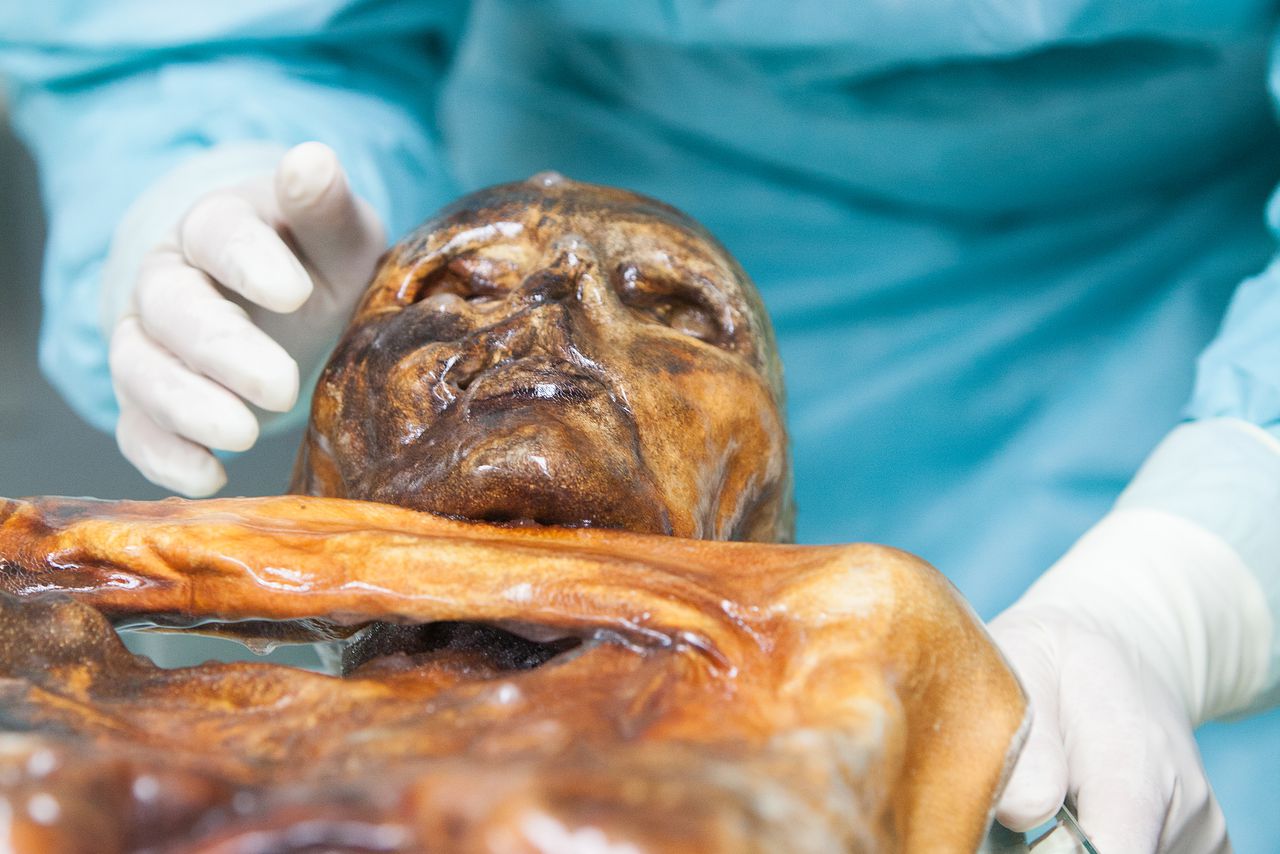
Bacteria found in the gut of a 5,300-year-old mummy may help scientists understand how our germs evolved with us.
By sequencing the DNA of stomach contents found inside the "Iceman," researchers found a pretty famous type of bacteria, H. pylori — the same type of bacteria that sometimes causes ulcers in humans today. And that finding, published today in Science, doesn't just hint that the Iceman may have been sick at the time of his murder. As it turns out, mummy bacteria also reveals a lot about ancient human history.
Scientists only recently noticed the mummy contained a full stomach
The Iceman was discovered in 1991 by a German couple vacationing in the Italian Alps. His body had been exhumed by glacier melting close to the Austrian border. In the years after the body's discovery, scientists figured out that the Iceman lived during the Copper Age, grew up in the Alps, and that he was somewhere between 40 and 50 years old when he died. They also discovered that he died when an arrowhead lodged itself in his left shoulder, severing a major artery. In 2012, an analysis of the Iceman's DNA revealed that the Iceman had brown eyes, brown hair, Type O blood, and that he was lactose intolerant. Now, scientists have turned their attention to the organisms that lived inside the Iceman's stomach. But getting to this point in their research wasn't easy; scientists only noticed that the mummy contained a full stomach in 2010, after re-examining CT scans of the body. And even then, scientists still had to do something drastic: defrost a 5,300-year-old corpse completely to find out what might lay inside.
(EURAC / Marion Lafogler)

First, scientists had to completely defrost the mummy. Then they went into the guts through a pre-existing cut in the lower abdomen, says Albert Zink, head of the Institute for Mummies and the Iceman at the European Academy in Bolzano, Italy, told reporters yesterday. "Through the opening in the mummy, we were able to get samples of the stomach content and different parts of the stomach and intestines."
They went into the guts through a pre-existing cut
By analyzing DNA contained in the samples, scientists figured out that the H. pylori strain found in the Iceman's gut wasn't the product of a modern contamination. "The Helicobacter sequences display damage patterns, so they were clearly of ancient origin," says Frank Maixner, coordinator at the Institute for Mummies and the Iceman. The researchers also determined that the Iceman carried a strain that's associated with inflammation in modern-day humans. In addition, the researchers found signs his immune system had been fighting off the infection. That might mean the Iceman was sick when he died, but his stomach lining wasn’t preserved well enough for researchers to know for sure.
Finding out if the Iceman felt sick before his death wasn't the researchers' main goal, however. What they wanted to do was use H. pylori's genome to uncover new information about human history.
(EURAC / Marion Lafogler)

That's possible because this particular bacterium only exists in human stomachs; it's transmitted when children play together, as well as from parent to child. It also happens to mutates very quickly, which means that H. pylori's DNA can give researchers an even higher resolution picture of how human populations have moved around the globe than human DNA would allow right now, says Yoshan Moodley, an evolutionary biologist at the University of Venda in South Africa and one of the co-authors of the study. In addition, scientists already know that the modern-day European population of this bacterium is made up of a roughly 50-50 combination of Asian and Northeast African bacterial populations. But what they don't know is when that mixture — one that would require close contact among disparate groups of people — took place.
That's why today's study is valuable for evolutionary biologists. The analysis of the bacteria's DNA shows it’s closely related to ancient North Indian H. pylori strains — and shares only a small amount of ancestry with North African strains. That's surprising, the researchers say, because modern European strains are closely related to North African strains. That means that the genetic mixture of ancestral bacterial strains found in modern Europeans hadn't occurred, or had not fully occurred, in Central Europe by the time of the Iceman's death.
"He carried an unmixed strain."
"Until now it was believe that this mixed strain was already present in the Neolithic [Period] — that the farmers brought this already mixed strain to Europe — and now we see in the Iceman that it wasn't like that. He carried an unmixed strain," Maixner said in a video interview. The bacteria inside the Iceman's gut was probably Paleolithic bacteria that existed in Europe at the time, Moodley said. And the African components that scientists see in modern European strains may have been "brought in by Neolithic farmers at some stage in the last 5,000 years."
It’s unlikely that today’s European mixture is the result of people from Asia walking to Europe and meeting African people there, Moodley says. Instead, the African components of modern H. pylori probably were transferred to the Middle East before moving into Europe over the last 5,000 years. The Asian bacterial population was probably widespread in prehistoric Europe; it would have evolved in the Middle East as well before spreading throughout Paleolithic Europe and Asia.
Reconstruction of the Iceman. (South Tyrol Museum of Archaeology / Ochsenreiter)

Krithi Sankaranarayanan, a microbiologist at the University of Oklahoma, says the study was well designed — but that's not all that he's excited about. He thinks the researchers' methods could be used to screen other mummies from similar or older time periods. And that's something that the researchers say they've thought of too. They're already in talks with scientists who have access to mummies in Asia, northern Europe, and South America, Zink said (mummies in Egypt had their stomachs removed, so they're pretty much off the table). And that’s promising for scientists, since it’s hard to draw population-wide conclusions based on just one specimen.
This probably isn't the last time you'll hear about the Iceman. His body is currently housed in the South Tyrolean Museum of Archaeology in Bolzano, Italy, and the researchers say that they still have sample materials left to look at, and some data to crunch. In addition, the researchers say that the Iceman didn't suffer too much from being defrosted and then re-frozen. Taking the samples didn't cause the Iceman's body any harm, Moodley said — "except maybe that he lacks some of his stomach content now."

 NPR logo

Itchy Eyes? Sneezing? Maybe Blame That Allergy On Neanderthals

Neanderthals, represented here by a museum's reconstruction, had been living in Eurasia for 200,000 years when Homo sapiens first passed through, and the communities intermingled. The same genes that today play a role in allergies very likely fostered a quick response to local bacteria, viruses and other pathogens, scientists say.

Neanderthals, represented here by a museum's reconstruction, had been living in Eurasia for 200,000 years when Homo sapiens first passed through, and the communities intermingled. The same genes that today play a role in allergies very likely fostered a quick response to local bacteria, viruses and other pathogens, scientists say.
Pierre Andrieu/AFP/Getty Images
Many people have Neanderthal genes in their DNA that predispose them to allergies, two studies published Thursday have found.
"So I suppose that some of us can blame Neanderthals for our susceptibility to common allergies, like hay fever," says Janet Kelso of the Max Planck Institute for Evolutionary Anthropology in Leipzig, Germany, who led one of the teams.
Scientists once thought of Neanderthals as brutish creatures who had little in common with modern humans. But as more evidence turned up, researchers realized Neanderthals were more sophisticated than previously thought and sometimes mated with early Homo sapiens.
"When modern humans were coming out of Africa, they met the Neanderthals who were living at that time in Europe and western Asia, interbred with them and carried with them some of the Neanderthal DNA as they migrated out into wider parts of the continent," Kelso says.
So Kelso and her colleagues and a second team from the Pasteur Institute decided to search through human DNA collected by the 1,000 Genomes Project for genes from Neanderthals and a third kind of early human — the Denisovans — that may be involved in regulating immunity.
Both teams identified three genes from these two extinct groups that play a role today in controlling a part of the human immune system known as "innate immunity."
"When the body detects that there is some foreign substance in the body, these are the guys that react immediately," Kelso says. "It kind of calls in the big guns" by mobilizing key immune system cells to attack.
They report the findings in two papers in the American Journal of Human Genetics.
These genes would have helped enable early humans to survive new diseases encountered as they traveled throughout the world, Kelso says.
"It's not surprising, right?" Kelso says. "Neanderthals were living in Europe and western Asia for 200,000 years before modern humans arrived on the scene. And that means that they'd had time to adapt to the local environment," including pathogens.
And when humans arrived and bred with the Neanderthals, it makes sense that evolutionary pressures would make it more likely that these ancestors of modern humans retained genes that allowed them to "adapt quickly and rapidly to local pathogens," Kelso says.
But there appears to be a downside for people who still carry these particular genes today. The same bits of DNA make the immune system more likely to overreact to certain stimuli such as pollen and animal hair, and increase the risk of developing other sorts of allergies.
"This is a trade-off of sorts," Kelso says. It remains unclear whether those genes also are still protecting people from pathogens, she and other scientists say.
"That's sort of the $1 million question," says Lluis Qutintana-Murci, with the Pasteur Institute in Paris, who led the second research team. "What was good in the past may or may not be good for us today."
But it is clear that Neanderthal genes do more than just affect the immune system. Previous research found Neanderthal DNA seems to influence human hair and skin, for example.
"I think this is really just the tip of the iceberg about how mating with Neanderthals influences all sorts of traits today," says Josh Akey, a professor of genome sciences at the University of Washington who studies Neanderthal and human DNA.

Tuesday, December 22, 2015

Did The Romans Beat Columbus To It? Scientists Make Extraordinary New Claim About Discovery Of America

feed_manager_auto_publish_494--autopubtest_WPTUMBLR_485

The year 1492 is etched in history as the date America was discovered.
Christopher Columbus’s pioneering journey has, for centuries, been considered Europe’s first contact with the continent.
But, although there is a degree of evidence to suggest a Norse settlement some 500 years earlier, other discussions about prior discoveries have fallen into category pseudo science.
The sword is believed to be Roman (SWNS)
But now a team of scientists claim to have found evidence they believe could “rewrite the history” of America.
They say it was first discovered by the Romans.
The new study claims ancient mariners visited the New World more than a 1,000 years before Columbus set foot there.

Researchers from the Ancient Artifact Preservation Society (AAPS) say a Roman sword was discovered in a shipwreck off Oak Island on the south shore of Nova Scotia, Canada.

The research reveals that a Roman legionnaire’s whistle, Gold Carthage coins, part of a Roman shield and a Roman head sculpture have also been found on the island.
Lead historian Jovan Hutton Pulitzer insists the haul is firm evidence the Romans landed there first and is the “single most important discovery” ever for the Americas.

“The ceremonial sword came out of that shipwreck. It is 100 per cent confirmed as Roman.

"I began my forensic work into it using an XRF analyser – which is a leading archaeological tool for analysing metals.

"And we found all these other metals that tell you this was made from ore that came directly from the ground.

"It has the same arsenic and lead signature in it. We’ve been able to test this sword against another one like it and it matches.

"Some years ago, a man and his son were scalloping off Oak Island, which sees them hang a rake-like object off the back of their boat.
The location of the find (SWNS)

"They put it under the surface and when they brought this up, the sword came up with it.

"The father kept it for decades, and when he died it went to his wife, then his daughter.

"Then when she died many years later it went to her husband. It was he who approached me and said ‘I think you should know about this and where it was found’.

"The shipwreck is still there and has not been worked,” he said.

Oak Island is a privately-owned 57-hectare island in Lunenburg County on the south shore of Nova Scotia.

It has been at the centre of one of the biggest treasure hunts in history, which began in in 1795 centring on the infamous 'Money Pit’ – a 230ft booby-trapped shaft which is thought to contain valuable artifacts.

Since 1795, six treasure hunters have lost their lives trying to excavate the pit.
The treasure, including this coin, was found on Oak Island (SWNS)
Mr Pulitzer thinks theories like his are too readily dismissed because they do not conform with traditionally held religious and political beliefs.

He added: "We have absolutely been lead to believe that nothing happened on this side of the pond before Christopher Columbus.

"That’s a church-induced concept. All the ancient records that exist make it very clear the world was circumnavigated and the world was round.

"But when the Catholic Church and the Romans came in, all those records were destroyed – so we had to kind of re-learn this stuff.”

The team plans to publish its report in full early next year.
(Credit: WikiCommons/ L. Prang & Co., Boston)

Thursday, November 26, 2015

When humans became farmers, how did genes change?

Researchers investigated how natural selection shaped the human genome as farming spread across ancient Europe in a new study.

It's well known that humanity's transition from a hunter-gatherer lifestyle to a farming one, a period known as the Neolithic Revolution, drastically transformed diets, cultures, and natural environments. What's less known is that it also left an imprint on the human genome.
In a paper published Monday in the journal Nature, researchers describe how they looked for changes in DNA from hundreds of humans who lived in West Eurasia from 6500 to 300 BCE. They found a variety of changes that happened over those years in the human genome, ranging from metabolic adaptations to pigmentation to immunity, but mostly those relating to diet.
"You can actually watch the frequencies of different mutations changing over time," study author Iain Mathieson, a postdoctoral researcher in population genomics at Harvard University, tells The Christian Science Monitor in an interview. He describes the pattern of these mutations as "incontrovertible evidence of selection."
"This is direct observational evidence of natural selection in humans changing the human genome over a time period of a few thousand years," says Dr. Mathieson.

Becoming milk drinkers

The strongest signal of selection was lactase persistence, says Mathieson. Humans domesticated cows but couldn't initially drink their milk. "It turns out," he explains, "4,000 years ago, everyone was lactose intolerant."
But over time, the traits that made humans tolerant to cows' milk were selected over the older traits.
This didn't happen right away, however. "Actually, it kind of post-dates the domestication of cattle by many thousands of years," says Mathieson. "Cattle were domesticated at least 8,000 years ago. People were living with cattle and raising them, but apparently were not able to digest milk, at least as adults."
Lactase persistence first appears in the genome some 4,500 years ago, says Mathieson, "but even then it's very rare. It's like one person in 50."
Although the scientists found adaptations for pigmentation and other traits, "the strongest signals we find seem to be mostly related to diet," says Mathieson.
"Some of the things we find possibly are associated with an agricultural or wheat-based diet," but those are more speculative explanations, says Mathieson. Some changing traits are associated with fatty-acid metabolism and others seem to be connected to vitamin D metabolism.
"It's sort of believed that as people moved into higher latitudes and lived in darker places, they actually had to adapt very quickly to get more vitamin D," he says.

A farming migration

Farming isn't thought to have originated in Europe, so how did agricultural techniques move into the region?
This genetic study also revealed insights into the migration of early farmers.
"We knew that farming was developed in Anatolia in the near East maybe 10,000 years ago," says Mathieson. "And we knew that it moved into Europe maybe starting 8,000 years ago. It's easy to tell from the archaeology."
"But what you can't tell from the archaeology is whether that's actually people moving, or whether it's just cultural transmission, people learning to farm."
"It was a migration. And it was a massive migration," he says.
But there wasn't just one source population for Europe's farmers.
"Our model for this period in history is that there are three, possibly four, populations coming together," says Mathieson. "We have the early farmers moving from Anatolia into Europe and mixing with the European hunter-gatherers that are already there." And another group comes in later from the steppe, he says.
As those groups mixed, the genetic variation helped them adapt. The variation was shared between the different groups, as they all adapted to the European environments.

The full genomic picture

Researchers have probed the human genome for signs of natural selection before, but have mainly looked at the present-day genome rather than ancient DNA samples.
But some of these signals could be obscured, Mathieson says. Certain major population changes, like migrations and mixtures of populations or a population bottleneck, where the population suddenly shrinks, can make it difficult to discern signals of natural selection, he says. It's also difficult to pinpoint how long ago a genetic change occurred using just modern DNA.
But using ancient DNA, researchers can combine archeological findings with genetic data.
"People have looked at selection in ancient DNA before" too, says Mathieson. But they have looked specifically at traits known from present-day genetics to have been selected.
This new study examines the whole genome, tracking the frequency of mutations spotted in the ancient individuals. This allows the scientists to look for any evidence of selection rather than focusing in on a story already known or assumed.
"I don't think we found everything," Mathieson admits. "We're still limited by our sample size, so it's clear that there's a lot of stuff going on that we're not finding."
The researchers used ancient DNA from 230 West Eurasians. In addition to looking at individuals who lived before and after adaptation in Europe, they also examined DNA from those Anatolian Neolithic farmers that are credited with bringing agriculture to Europe.
"This is really the first time that we've been able to actually answer these sorts of questions," says Mathieson.
It's tricky to study genetic adaptation in people. "You can do experiments with, say, bacteria and you can watch them evolve over time, but you don’t do that with humans," Mathieson says. It would take thousands of years. "Here, what we’re doing is looking at that experiment that’s already happened."

Wednesday, July 29, 2015

Skeleton With ‘Alien’ Skull Discovered In Russia


f

feed_manager_auto_publish_494--autopubtest_WPTUMBLR_485


UFO watchers are in a tizz over the discovery of an ancient skeleton with an elongated skull that resembles an ALIEN.
The humanoid skeleton was unearthed from a site known as Russia’s Stonehenge and it is being heralded as proof that aliens visited Earth thousands of years ago.
However, archaeologists don’t share the same view as alien hunters, insisting that the skeleton belonged to a female from a tribe that used to bind the head to make it grow out of shape.

Researcher Maria Makurova told Russian news agency TASS: “We have found a well preserved skeleton.
“I would not exclude the possibility that the skeleton belongs to a woman from the Sarmati trible that lived in the territories of what is now modern day Ukraine, Kazakhstan and southern Russia.
"Her skull was elongated because the tribe did so by tying up the heads of their children with rope.

“It was clearly a tradition in the tribe.”
But believers in life on other planets claim that if this was the case, it was simply a way of mimicking the elongated skulls of the alien visitors.
Makurova said that archeologists were still working on theories as to why the tribe had the skull-lengthening tradition, but had so far not come up with a reason.

Scientists who exposed the photographs say they believe that the body, that was discovered at Arkaim, did not date back as far as the age of the site, that originated in 4,000 BC.
They believe the bones in fact date back to around 200-300 AD - making them less than 2,000-year-old.
The Akraim archaeological site was discovered in 1987.

Saturday, June 13, 2015

Ancient DNA sheds light on how language, cultures evolved in Bronze Age Europe

Genome studies provide information about Eurasian Bronze Age migrations, culture, language
Scholars want to understand the origins of modern Indo-European languages. Ancient DNA may help.
It's tricky studying the history of a time when no one wrote things down. Archaeology pieces together how people lived in the past by studying artifacts they left behind; linguistics by analyzing newer languages to reconstruct the old

This week, another branch of science -- genetics -- gave the exercise a try, as two separate teams of scientists published reports detailing how they used DNA to map out human migrations that took place thousands of years ago. Their discoveries helped shed light on decades-old questions about the origins of European languages.
At issue is anthropologists' understanding of the huge cultural changes that swept through during the Bronze Age in Europe and Central Asia, around 3000 B.C. to 1,000 B.C. Some scholars have argued that the spread of new cultures at the time was the result of people staying in place and spreading their ideas. Others believe that populations relocated, migrating and carrying their way of life -- and perhaps, the rudiments of the languages we speak today -- with them.
In the two new studies, both published by the journal Nature, genetics researchers bolstered one side of the argument: that it was people, not ideas, who did the moving.
"Our findings show that these transformations involved migrations," wrote University of Copenhagen evolutionary biologist Eske Willerslev and his coauthors, in one of the reports.
Combined, Willerslev's study and a separate effort led by Harvard Medical School geneticist David Reich looked at DNA from the remains of 170 individuals who lived across Europe and Central Asia between about 6,000 B.C. to 900 B.C.
Because the DNA samples were very old, their quality was relatively poor. But they were good enough, wrote University of Chicago geneticist John Novembre in an editorial accompanying the studies, to "discern broad brushstrokes of human migration."
Significantly, both teams noticed strong genetic similarities between members of the early Bronze Age Yamnaya culture, of the Russian steppes, and members of the later Corded Ware culture, of central Europe -- suggesting that Yamnaya people had migrated north and west.
That supports the so-called steppe hypothesis, which argues that the precursor of today's Indo-European languages (such as Hindi, Germanic, Romance and Slavic tongues) originated from the steppes and was spread through Europe by members of the Corded Ware culture.
"Ancient DNA cannot prove how language spread, of course ... but expansions of Yamnaya-related peoples add weight to the steppe hypothesis. If genes were moving en masse, it is likely that words were, too," Novembre wrote. "It will be exciting to see what the careful use of ancient DNA will reveal about the history of other language families and their speakers."

Corded Ware culture

From Wikipedia, the free encyclopedia
Boat-shaped battle axe from Närke
 
The Corded Ware culture (German: Schnurkeramik; French: ceramique cordée; Dutch: touwbekercultuur;[1] in Middle Europe c. 2900–2450/2350 cal. BC),[2] alternatively characterized as the Battle Axe culture or Single Grave culture, is an enormous European archaeological horizon that begins in the late Neolithic (Stone Age), flourishes through the Copper Age and culminates in the early Bronze Age. Other terms are corded pottery and corded ceramic, the latter being a calque in translations.
The Corded Ware culture is the major north and central European cultural grouping of the Copper Age, stretching from the Netherlands and Switzerland in the west, across southern Scandinavia and Central Europe as far east as the upper Volga (Fatyanovo–Balanovo culture) and middle Dnieper (Middle Dnieper culture). The culture is reflected primarily by its burials, which consisted of inhumation under tumulus with various artifacts (notably battle-axes). Corded Ware coincides considerably with the earlier north-central European Funnelbeaker culture (TRB), with which it shares a similar physical type and several cultural characteristics, suggesting that the Corded Ware originated with the TRB at least in some regions.[3] In other regions the Corded Ware appears to herald a new culture and physical type.[3]
Because of their possession of both the horse and wheeled vehicles, apparent warlike propensities, wide area of distribution and rapid intrusive expansion at the assumed time of the dispersal of Indo-European languages, the Corded Ware culture was originally suggested as the Urheimat of the Proto-Indo-Europeans.[3] Today, a Corded Ware origin of these characteristics has lost currency in favour of an origin in the Black Sea-Caspian region, although this has been criticized.[3] Corded Ware is however still generally considered ancestral to the Celts, Germanic peoples, Balts and Slavs.[3] According to J. P. Mallory the origins and dispersal of Corded Ware culture is one of the pivotal unresolved issues of the Indo-European Urheimat problem.[3]

Contents

Extent

It encompassed most of continental northern Europe from the Rhine River on the west, to the Volga River in the east, including most of modern-day Germany, the Netherlands, Denmark, Poland, Lithuania, Latvia, Estonia, Belarus, Czech Republic, Slovakia, northwestern Romania, northern Ukraine, and the European part of Russia, as well as coastal Norway and the southern portions of Sweden and Finland.
The contemporary Beaker culture overlapped with the western extremity of this culture, west of the Elbe, and may have contributed to the pan-European spread of that culture. Although a similar social organization and settlement pattern to the Beaker were adopted, the Corded Ware group lacked the new refinements made possible through trade and communication by sea and rivers.[4]

Nomenclature

It receives its name Corded Ware from the ornamentation of its characteristic pottery, Single Grave from its burial custom, and Battle Axe from its characteristic grave offering to males, a stone battle axe.

Origins and development

Concerning the origin of the Corded Ware culture, there is broadly a division between archaeologists who see an influence from pastoral societies of the steppes north of the Black Sea and those who think that Corded Ware springs from central Europe.
In places a continuity between Funnelbeaker and Corded Ware can be demonstrated, whereas in other areas Corded Ware heralds a new culture and physical type.[3] On most of the immense, continental expanse that it covered, the culture was clearly intrusive, and therefore represents one of the most impressive and revolutionary cultural changes attested by archeology.[4] The degree to which cultural change generally represents immigration is a matter of debate, and such debate has figured strongly in discussions of Corded Ware.

Corded ware pottery in the Museum für Vor- und Frühgeschichte (Berlin). Ca. 2500 BC
 
Corded Ware ceramic forms in single graves develop earlier in area that is now Poland than in western and southern Central Europe.[5] The earliest radiocarbon dates for Corded Ware come from Kujavia and MaÅ‚opolska in central and southern Poland and point to the period around 3000 BC. (It must be noted that this study is limited to Middle Europe.) Carbon-14 dating of the remaining central European regions shows that Corded Ware appeared after 2880 BC[6] It spread to the Lüneburger Heide and then further to the North European Plain, Rhineland, Switzerland, Scandinavia, the Baltic region and Russia to Moscow, where the culture met with the pastoralists considered indigenous to the steppes.[4]
In the western regions this revolution has been proposed to be a quick, smooth and internal change that occurred at the preceding Funnelbeaker culture, having its origin in the direction of eastern Germany.[7] Whereas in the area of the present Baltic states and Kaliningrad Oblast (former East Prussia), it is seen as an intrusive successor to the southwestern portion of the Narva culture.
In summary, Corded Ware does not represent a single monolithic entity, but rather a diffusion of technological and cultural innovations of different, contemporaneous peoples, living in close proximity to each other and leaving different archaeological remains.
In 2015 researchers reported that, based on the DNA analysis of 98 ancient skeletons from Europe and Russia, there had been a massive migration of Yamna culture people from the North Pontic steppe into Europe about 4,500 years ago. About 75% of the DNA of late Neolithic Corded Ware skeletons found in Germany were the same as the Yamnaya DNA.[8][9]

Economy

There are very few discovered settlements, which led to the traditional view of this culture as exclusively nomadic pastoralists. However, this view was modified, as some evidence of sedentary farming emerged. Traces of Emmer wheat, bread wheat and barley were found at a Corded Ware site at Bronocice in south-east Poland. Wheeled vehicles (presumably drawn by oxen) are in evidence, a continuation from the Funnelbeaker culture era.[3]
Cows' milk was used systematically from 3400 BC onwards in the northern Alpine foreland. Sheep were kept more frequently in the western part of Switzerland due to the stronger Mediterranean influence. Changes in slaughter age and animal size are possibly evidence for sheep being kept for their wool at Corded Ware sites in this region.[10]

Graves

Inhumation occurred in flat graves or below small tumuli in a flexed position; on the continent males lay on their right side, females on the left, with the faces of both oriented to the south. However, in Sweden and also parts of northern Poland the graves were oriented north-south, men lay on their left side and women on the right side - both facing east. Originally, there was probably a wooden construction, since the graves are often positioned in a line. This is in contrast with practices in Denmark where the dead were buried below small mounds with a vertical stratigraphy: the oldest below the ground, the second above this grave, and occasionally even a third burial above those. Other types of burials are the niche-graves of Poland. Grave goods for men typically included a stone battle-axe. Pottery in the shape of beakers and other types are the most common burial gifts, generally speaking. These were often decorated with cord, sometimes with incisions and other types of impressions.

Late battle axe from Gotland
 
The approximately contemporary Beaker culture had similar burial traditions, and together they covered most of Western and Central Europe. While broadly related to the Corded Ware culture, the origins of the Bell-Beaker folk are considerably more obscure, and represent one of the mysteries of European pre-history.
In April 2011, it was reported that a deviant Corded Ware burial had been discovered in a suburb of Prague.[11] The remains, believed to be male, were orientated in the same way as women's burials and were not accompanied by any gender-specific grave goods. The excavators suggested the grave may have been that of a "member of a so-called third gender, which were people either with different sexual orientation or transsexuals or just people who identified themselves differently from the rest of the society",[11] while media reports heralded the discovery of the world's first "gay caveman".[12][13] Archaeologists and biological anthropologists criticised media coverage as sensationalist. "If this burial represents a transgendered individual (as well it could), that doesn't necessarily mean the person had a 'different sexual orientation' and certainly doesn't mean that he would have considered himself (or that his culture would have considered him) 'homosexual,'" anthropologist Kristina Killgrove commented. Other items of criticism were that someone buried in the Copper Age was not a "caveman" and that identifying the sex of skeletal remains is difficult and inexact.[14] A detailed account of the burial has not yet appeared in the scientific literature.

Diffusion of metallurgy in Europe and Asia Minor. The darkest areas are the oldest.

Subgroups

Corded Ware culture

The prototypal Corded Ware culture, German Schnurkeramikkultur, is found in Central Europe, mainly Germany and Poland, and refers to the characteristic pottery of the era: twisted cord was impressed into the wet clay to create various decorative patterns and motifs. It is known mostly from its burials, and both sexes received the characteristic cord-decorated pottery. Whether made of flax or hemp, they had rope.

Single Grave culture

General term used to refer to a series of late Neolithic communities of the 3rd millennium BC living in Scandinavia, northern Germany, and the Low Countries that share the practice of single burial under barrows, the deceased usually being accompanied by a battle-axe, amber beads, and pottery vessels. The cultural emphasis on drinking equipment already characteristic of the early Funnelbeaker culture, reappeared with the spread of Corded Ware traditions. Especially in the west (Scandinavia and northern Germany), the drinking vessels have a protruding foot and define the Protruding-Foot Beaker culture (PFB) as a subset of the Single Grave culture.[15] The Bell Beaker culture has been proposed to derive from this specific branch of the Corded Ware culture.

Swedish-Norwegian Battle Axe culture

Pottery from Lilla Beddinge cemetery in Skåne, Sweden
 
The Swedish-Norwegian Battle Axe culture, or the Boat Axe culture, appeared ca. 2800 BC and is known from about 3000 graves from SkÃ¥ne to Uppland and Trøndelag. While Swedish writer Herman Lindqvist has referred to this as the "Age of crushed skulls", there is no indication that this was an especially violent time, and most of the "crushing" happened post-mortem in the ground.[dubious ] The "battle-axes" were primarily a status object. There are strong continuities in stone craft traditions, and very little evidence of any type of full-scale migration, least of all a violent one. The old ways were discontinued as the corresponding cultures on the continent changed, and the farmers living in Scandinavia took part in those changes since they belonged to the same network. Settlements on small, separate farmsteads without any defensive protection is also a strong argument against the people living there being aggressors. Recently also the mixture of this culture with Barbed Wire Beaker culture elements from the west that reached until Sweden in the Late Neolithic, probably ultimately derived from the same Corded Ware stock, has come into the picture.[16]
About 3000 battle axes have been found, in sites distributed over all of Scandinavia, but they are sparse in Norrland and northern Norway. Less than 100 settlements are known, and their remains are negligible as they are located on continually used farmland, and have consequently been plowed away. Einar Østmo reports sites inside the Arctic Circle in the Lofoten Islands, and as far north as the present city of Tromsø.
The Swedish-Norwegian Battle Axe culture/Boat Axe culture was based on the same agricultural practices as the previous Funnelbeaker culture, but the appearance of metal changed the social system. This is marked by the fact that the Funnelbeaker culture had collective megalithic graves with a great deal of sacrifices to the graves, but the Battle Axe culture has individual graves with individual sacrifices.
A new aspect was given to the culture in 1993, when a death house in Turinge, in Södermanland was excavated. Along the once heavily timbered walls were found the remains of about twenty clay vessels, six work axes and a battle axe, which all came from the last period of the culture. There were also the cremated remains of at least six people. This is the earliest find of cremation in Scandinavia and it shows close contacts with Central Europe.
In the context of the entry of Germanic into the region, Einar Østmo emphasizes that the Atlantic and North Sea coastal regions of Scandinavia, and the circum-Baltic areas were united by a vigorous maritime economy, permitting a far wider geographical spread and a closer cultural unity than interior continental cultures could attain. He points to the widely disseminated number of rock carvings assigned to this era, which display "thousands" of ships. To seafaring cultures like this one, the sea is a highway and not a divider.

Finnish Battle Axe culture

The Finnish Battle Axe culture was a mixed cattle-breeder and hunter-gatherer culture, and one of the few in this horizon to provide rich finds from settlements.

Middle Dnieper and Fatyanovo-Balanovo cultures

The eastern outposts of the Corded Ware culture are the Middle Dnieper culture and on the upper Volga, the Fatyanovo-Balanovo culture. The Middle Dnieper culture has very scant remains, but occupies the easiest route into Central and Northern Europe from the steppe. If the association of Battle Axe cultures with Indo-European languages is correct, then Fatyanovo would be a culture with an Indo-European superstratum over a Uralic substratum,[citation needed] and may account for some of the linguistic borrowings identified in the Indo-Uralic thesis. However, according to Häkkinen, the Uralic–Indo-European contacts only start in the Corded Ware period and the Uralic expansion into the Upper Volga region postdates it. Häkkinen accepts Fatyanovo-Balanovo as an early Indo-European culture, but maintains that their substratum (identified with the Volosovo culture) was neither Uralic nor Indo-European.[17] Genetics seems to support Häkkinen.[citation needed]

See also