Late
last year, Boeing rolled out the first completed 737 Max 8 airliner at
its assembly facility in Renton, Washington. The company's
next-generation single-aisle airliner was presented at a ceremony in
front of several thousand Boeing employees.
Over
the years, the 737 family has become the bestselling airliner in the
history of commercial aviation, with more than 13,000 aircraft sold
since 1965. It is arguably Boeing's bread-and-butter model.
"Today
marks another in a long series of milestones that our team has achieved
on time, per plan, together," Boeing Vice President Keith Leverkuhn
said in a statement. "With the rollout of the new 737 Max — the first
new airplane of Boeing's second century — our team is upholding an
incredible legacy while taking the 737 to the next level of
performance."
Since
its introduction in 1967, Boeing's 737 has helped revolutionize short-
to medium-range air travel. Upon its debut, the original 737 was dubbed
the "baby Boeing."
Wikipedia
The
737 offered airlines a capable and reliable aircraft at a much lower
price than Boeing's larger and more expensive 707 and 727 models —
perfect for short routes between cities.
AP
In
the late 1970s, Boeing developed a generation of 737 jets called the
"Classic Series." These jets offered more range and seating capacity. In
addition, the Classic Series was offered with the new CFM56 turbofan
engines, which provided greatly improved fuel economy and power.
Flickr/Aero Icarus
In 1997, Boeing introduced a further upgraded series of 737 called the "737 Next Generation."
AP
Equipped with updated avionics, a full-glass cockpit, and fuel-saving winglets, these are the 737s we see in service today.
Flickr/redlegsfan21
With
competition from the Airbus A320 at a fever pitch, Boeing has launched
the latest generation of the venerable jet, called the 737 Max.
Boeing
The 737 Max will compete against Airbus' new A320neo.
AP
The
first 737 Max rolled out of the production hangar on November 30, 2015
before heading to the paint shop. According to Boeing, the jet met the
company's production deadline, which was set more than four years ago.
Boeing
With the less-than-successful sales run of the latest 747 jumbo jet and ...
Boeing
... the rocky rollout of the 787 Dreamliner, ...
Wikimedia Commons
.... the on-time and thus-far trouble-free arrival of the new 737 is refreshing.
Boeing
To create the Max, Boeing made significant changes to the existing 737.
Boeing
Boeing claims that the 737 Max's new wing tips reduce fuel consumption by 1.8%, compared to the current generation's wings.
Boeing
The new jet will come with state-of-the-art, fuel-saving CFM International Leap 1B engines.
Boeing
Boeing also redesigned the fuselage and wings of the jet to reduce weight and optimize aerodynamics.
AP
Altogether, the company says the new jet is 20% more fuel efficient than the current 737 in service, and ...
AP
... 8% cheaper per seat to operate than the rival A320neo.
Airbus
Up front, the Max features a full-glass cockpit and the latest avionics.
Boeing
Although the passenger cabin of the first Max was filled with flight-testing equipment, ...
Boeing
... planes pulling passenger duty will feature Boeing's "Sky Interior."
Boeing
The
Boeing 737 Max series will range from the smaller, 149-seat Max 7 to
the 220-seat Max 9. The jet that debuted is a 189-seat Max 8.
Boeing
The second and third 737 Max aircraft are currently working their way down Boeing's Renton production line.
Boeing
Currently,
Boeing has nearly 3,000 orders on the books for the 737 Max. At 2015
prices, the smaller Max 7 starts at $90.2 million per plane, while the
Max 9 starts at $116.6 million.
Boeing
Boeing expects the Max to make its maiden flight in early 2016 with ...
Boeing
... delivery to launch partner Southwest scheduled for the third quarter of 2017.
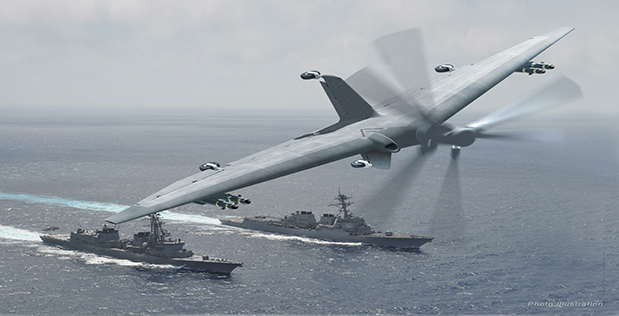
A DARPA artist's rendering of the Northrop Grumman concept
for TERN, a "tail-sitter" drone that takes off and lands vertically on
smaller ships' flight decks. It could fill a major gap in the
capabilities of the Littoral Combat Ship.
Back in the 1950s, the US Navy was looking for a way to give
destroyers and frigates an effective way to take on enemy air attacks—a
sort of "first responder" aircraft that could take to the skies to hold
off hostile aircraft until carrier-based fighters arrived, and it could
give those ships the ability to strike over the horizon at enemy ships.
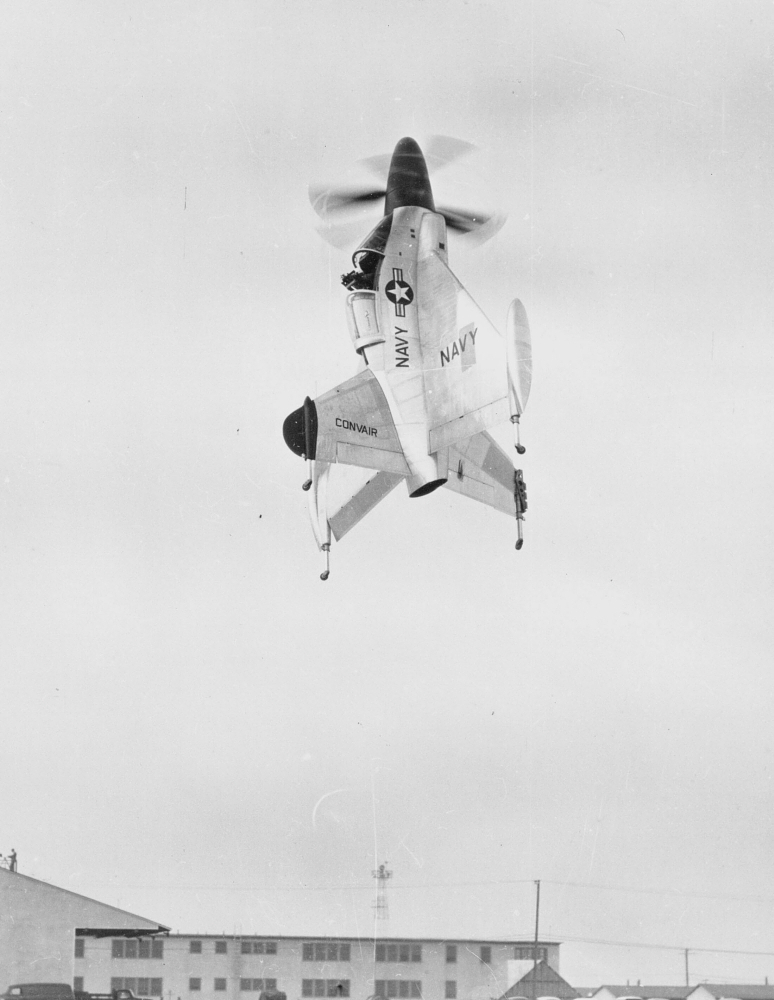
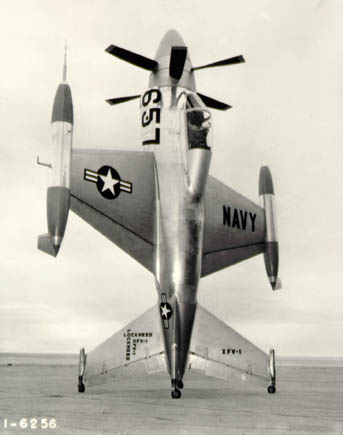
The answer they came up with was a "tail-sitter" propeller fighter
aircraft that took off like a helicopter and transitioned into winged
flight.
While several experimental aircraft were developed, including the
General Dynamics Corvair XFY-1 "Pogo" and the Lockheed XFV-1 (also known
as the "Salmon"), these aircraft with counter-rotating propellers were
never deployed—mostly because they couldn't match the airspeed of the
jet aircraft they would likely face in combat, and the Navy was afraid
pilots wouldn't be able to handle the complexities of landing the things
on a small, pitching deck. The Navy instead focused on missile defenses
and carrier battle group tactics, and they depended on helicopters to
provide smaller ships with the ability to reach out further—to strike at
submarines, provide gun spotting, and (with the MH-60 Sea Hawk
helicopter) shoot up less robustly defended targets on the ground and on
the sea.
But now those 1950s "tail-sitters" are looking more like they're back to the future. The Defense Advanced Research Projects Agency has asked Northrop Grumman to move forward with development of a drone
that uses a similar approach to flying, intended to give smaller
surface ships a stealthy, larger drone with capabilities on par with
those currently flown by the Army and Air Force. Called the TERN (for
"Tactically Exploited Reconnaissance Node"), the program is jointly
funded by DARPA and the Office of Naval Research.
Northrop Grumman was one of two competitors involved in the TERN
program, which up to this point has been largely conceptual. The
Northrop Grumman design, like the Pogo and Salmon of the 1950s, uses
coaxial, counter-rotating propellers to achieve vertical flight. But its
body more closely resembles Northrop Grumman's other Naval drone
prototype, the X-47B carrier drone.
In a statement released by DARPA, TERN Program Manager Dan Patt said,
"The design we have in mind for the Tern demonstrator could greatly
increase the effectiveness of any host ship by augmenting awareness,
reach, and connectivity. We continue to make progress toward our goal to
develop breakthrough technologies that would enable persistent ISR and
strike capabilities almost anywhere in the world at a fraction of
current deployment costs, time and effort.”
In English, that means that DARPA is counting on the more substantial
flying-wing design to be more in the class of the Army's RQ-9 Reaper or
MQ-1C Grey Eagle (the Army's upgraded version of the MQ-1 Predator). A
flying-wing TERN could carry Hellfire missiles, bombs, and other
kinetically destructive packages to deploy against all manners of
targets, launched stealthily from the deck of an inconspicuous Littoral
Combat Ship (LCS) or destroyer well off the coast.
Such a drone would at least partially fill the holes in the LCS'
never-realized role in providing fire support for Marines ashore with
the canceled NLOS missile system. The deputy program manager for TERN,
Gil Graff of the Office of Naval Research, said in a DARPA-published
statement, "If successful, TERN could open up exciting future
capabilities for Navy small-deck surface combatants and U.S. Marine
Corps air expeditionary operations.” And by "exciting," Graff probably
meant "actually can blow things up." By comparison, the current drone
deployed on LCS ships, Northrop Grumman's MQ-8 Fire Scout—a helicopter
drone that was a survivor of the Army's Future Combat Systems program—is
mostly good for looking at things.
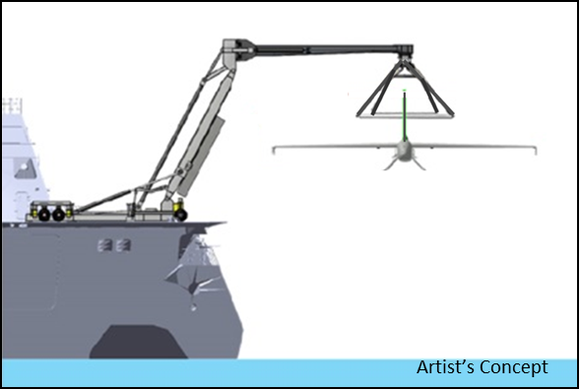
Northrop was selected over drone manufacturer AeroVironment, the
other contender in the most recently completed, mostly conceptual phase
of TERN. While details of AeroVironment's concept haven't been released,
it's widely believed that the company was behind the "sidearm" approach
for recovery being forwarded early in TERN's development—a mechanical
arm that reaches out over the side of the ship to capture the drone as
it returns. Another proposed deployment and recovery method created by
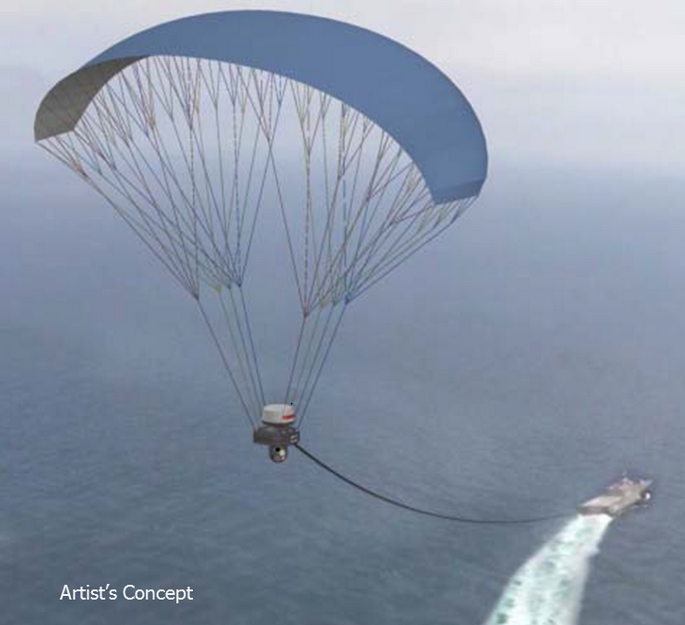
the Maritime Applied Physics Corporation—using a towed parafoil "docking
station" to capture and reel in the drone—has turned into a separate
program entirely, called TALONS
(Towed Airborne Lift of Naval Systems). Instead of acting as a drone
snagger, TALONS could be used to give smaller ships and even patrol
boats an over-the-horizon visual and radar sensor platform—putting up to
200 pounds of sensors as high as 1,000 feet in the air.
Air Force commanders are now urging the Pentagon to deploy B-52s in Syria.
76 B-52s still make up the bulk of the United States’ long-range bomber
fleet, and they are not retiring anytime soon. The next potential
replacement — the Long Range Strike Bomber, which has yet to be designed
— is decades away, so the B-52 is expected to keep flying until at
least 2040. By then, taking one into combat will be the equivalent of
flying a World War I biplane during the invasion of Iraq in 2003.
The Air Force to churn out more than 740 of the swept-wing B52 bombers
at a then-unprecedented cost of around $8 million each. The Boeing B-52
Stratofortress is a long-range, subsonic, jet-powered strategic bomber.
The B-52 was designed and built by Boeing, which has continued to
provide support and upgrades. It has been operated by the United States
Air Force (USAF) since the 1950s. The bomber is capable of carrying up
to 70,000 pounds (32,000 kg) of weapons. The first flew in 1952 and the
last was built in 1962.
The B52's rugged design has allowed it to go nearly anywhere and drop
nearly anything the Pentagon desires, including both atomic bombs and
leaflets.
Underwhelming jets have been put forth to take the place of the B52.
Even as the B52 bombers were being assembled, defense officials were
planning their replacement, but each plan was undone by its own
complexity. First was a nuclear-powered bomber able to stay aloft for
weeks (too radioactive),
The Convair X-6 was a proposed experimental aircraft project to develop and evaluate a nuclear-powered jet aircraft.
The project was to use a Convair B-36 bomber as a testbed aircraft, and
though one NB-36H was modified during the early stages of the project,
the program was canceled before the actual X-6 and its nuclear reactor
engines were completed. The X-6 was part of a larger series of programs,
costing US$7 billion in all, that ran from 1946 through 1961.
An
air-to-air view of the Convair NB-36H Peacemaker experimental aircraft
(s/n 51-5712) and a Boeing B-50 Superfortress chase plane during
research and development taking place at the Convair plant at Forth
Worth, Texas (USA).
then the even faster B-70 (spewed highly toxic exhaust).
B70
The $283 million B-1B Lancer first rolled off the assembly line in 1988
with a state-of-the-art radar-jamming system that jammed its own radar.
B1B
The $2 billion B-2, with its delicate radar-evading coating, had to be
stored in a climate-controlled hangar to be effective, and its sensors
at first could not tell a storm cloud from a mountain. It soon became
known as the $2 billion bomber that cannot go out in the rain.
The Air Force is trying to change the image of the B-52 from
indiscriminate carpet bomber to precision weapon. Laser-targeting pods
attached to the wing of many of the bombers in recent years allow them
to drop guided “smart” bombs.
Northrop Grumman was selected over a Boeing Co. and Lockheed Martin
Corp. team to build the first 21 jets to replace aging B-52 and B-1 war
planes. The contract eventually could be worth $80 billion and provide
100 planes total. The first aircraft are due to enter service around
2025.
The new radar-evading bomber is designed to fly undetected over
potential adversaries such as Russia or China that have upgraded their
air defenses. The plane is capable of firing conventional and nuclear
weapons, becoming the third leg of the nuclear triad alongside submarine
and land-based ballistic missiles
Pentagon officials in recent weeks have provided a few details on what
the Air Force has called one of its top three priorities, alongside the
Lockheed-built F-35 fighter and Boeing-built KC-46A refueling tanker.
The service requested that two independent government cost estimators
look at the program. The two groups projected that each bomber will cost
$511 million in 2010 dollars on average if 100 planes are built, Air
Force officials told reporters on Tuesday — substantially less than the
original $550 million target cost set by then Secretary of Defense
Robert Gates. This translates to $564 million per plane in fiscal year
2016 dollars.
LRS-B’s projected unit cost is higher compared to the B-1, but
significantly lower relative to the $1.5 billion price tag of Northrop’s
B-2, according to an Air Force handout. The expected development cost
overall for LRS-B is also lower than for the B-2, at $23.5 billion.
SOURCES- Wall Street Journal, Defense News, wikipedia, NY Times
http://www.seattletimes.com/
After 60 years, B-52 bombers slow, rusty and frighteningly effective
A B-52 undergoes maintenance at Barksdale Air Force Base in
Louisiana. The bombers, scheduled for retirement years ago, are now
expected to keep flying until at least 2040. (EDMUND D FOUNTAIN/NYT)
The B-52, originally
scheduled for retirement generations ago, has outlived its replacement.
And its replacement’s replacement. And its replacement’s replacement’s
replacement.
OVER THE GREAT PLAINS — Glance down from the ageless expanse of
blue sky and look around the cockpit of the Air Force’s largest bomber,
where the panorama is more dated: banks of steam gauges quiver above
aluminum levers built during the Eisenhower administration, obsolete
knobs and dials unused in decades gather dust.
Much of the rest of the mammoth B-52 bomber is just as antiquated.
Vacuum tubes have been replaced with microchips, and the once-standard
ashtrays are gone. But eight engines along the wings still connect to
the cockpit by yards of cables and pulleys, and the navigator often
charts a course with a slide rule.
“It’s
like stepping back in time,” said Capt. Lance Adsit, 28, the pilot. He
banked left to start a mock bombing run, wrestling a control yoke forged
decades before he was born. Time had stripped it of paint.
“I love the B-52,” Adsit said. “But the fact that this is still flying is really insane.”
A few minutes later, his onboard navigation computers crashed.
The B-52 is an Air Force plane that refuses to die. Originally
scheduled for retirement generations ago, it continues to be deployed in
conflict after conflict. It dropped the first hydrogen bomb in nuclear
tests at the Bikini Atoll in 1956, and it laser-guided bombs in
Afghanistan in 2006. It has outlived its replacement. And its
replacement’s replacement. And its replacement’s replacement’s
replacement.
Air Force commanders are now urging the Pentagon to deploy B-52s in Syria.
“We’re ready, we’re hungry, we’re eager to be in the fight,” said
Col. Kristin Goodwin, who commands the 2nd Bomb Wing at Barksdale Air
Force Base in Louisiana, where about half the bombers are based.
The bomber, in its 60th year of active service, is slow, primitive
and weighed down by an infamy lingering from the carpet bombing of
Vietnam in the 1960s. But 76 B-52s make up the bulk of the United
States’ long-range bomber fleet, and they are not retiring anytime soon.
The next potential replacement — the Long Range Strike Bomber, which
has yet to be designed — is decades away, so the B-52 is expected to
keep flying until at least 2040. By then, taking one into combat will be
the equivalent of flying a World War I biplane during the invasion of
Iraq in 2003.
Replacements fall short
The unexpectedly long career is due in part to a rugged design that
has allowed the B-52 to go nearly anywhere and drop nearly anything the
Pentagon desires, including atomic bombs — and leaflets. But it is also
due to the underwhelming jets put forth to take its place. The
$283 million B-1B Lancer first rolled off the assembly line in 1988 with
a state-of-the-art radar-jamming system that jammed its own radar. The
$2 billion B-2 Spirit, introduced a decade later, had stealth technology
so delicate that it could not go into the rain.
“There have been a series of attempts to build a better
intercontinental bomber, and they have consistently failed,” said Owen
Coté, a professor of security studies at the Massachusetts Institute of
Technology. “Turns out whenever we try to improve on the B-52, we run
into problems, so we still have the B-52.”
Officially,
the B-52 is called the Stratofortress, but flight crews long ago
nicknamed it the BUFF, a colorful acronym that the Air Force
euphemistically paraphrases as Big Ugly Fat Fellow.
Too outmoded to be a stealth bomber, the B-52 has become the
anti-stealth bomber: a loud, obvious and menacing albatross. It has
pummeled armored divisions in Iraq and has laid thunderous walls of
destruction over Taliban positions in Afghanistan.
“The big plane was very good,” said one beaming Northern Alliance
commander in 2001. In more recent years, it has flown only what the Air
Force calls “assurance and deterrence” missions near North Korea and
Russia. In 2013, when China claimed disputed airspace over the South
China Sea, two B-52s soared through in defiance.
“The BUFF is like the rook in a chess game,” said
Maj. Mark Burley, the co-pilot for the training mission over the Great
Plains. “Just by how you position it on the board, it changes the
posture of your adversary.”
Embarrassing failures
A front-page story in The New York Times in 1966 said all B-52s would
need to retire by 1975 because they would “be too old to continue
beyond that point.” But no viable alternative emerged.
In 1982, President Reagan warned: “Many of our B-52 bombers are now
older than the pilots who fly them.” Today, there is a B-52 pilot whose
father and grandfather flew the plane.
Reagan
rushed production of the B-1, which was designed to fly fast and low
beneath enemy defenses. It was expected to replace the B-52 in the
1990s, but in a prelude of future problems, the first B-1 unveiled in
1985, before a crowd of 30,000, failed to start. Design flaws and engine
fires sidelined the plane during the Persian Gulf War and have limited
its use since.
Next came the B-2 stealth bomber in 1997. But the B-2, with its
delicate radar-evading coating, had to be stored in a climate-controlled
hangar to be effective, and its sensors at first could not tell a storm
cloud from a mountain. It soon became known as the $2 billion bomber
that cannot go out in the rain.
The B-52 became a technologically humble — but still frighteningly effective — stand-in.
The Air Force is trying to change the image of the B-52 from
indiscriminate carpet bomber to precision weapon. Laser-targeting pods,
attached to wings of many of the bombers in recent years, allow them to
drop guided “smart” bombs. Also in recent years, the big bombers
circling high above Afghanistan acted as close air support. “We’re as
accurate as a fighter,” said Lt. Col. Sarah Hall, a B-52 pilot who flew
missions over Afghanistan.
Airborne museum piece
While its weaponry has been upgraded, the rest of the plane can look like a midcentury museum exhibit.
Ground crews scouring the aging frames for rust often find graffiti
in hidden nooks by previous generations; a recent discovery, perhaps
commenting on the planes’ age, featured primitive cave-style animal
paintings.
Despite intensive maintenance, the B-52s’ ages are starting to show.
On a recent training flight out of Barksdale Air Force Base after three
days of rain, leaks in a bomber left its seats soaked and the control
panel glistening. One engine refused to start, and then some wiring
shorted.
“This is really the full BUFF experience,” the co-pilot said with a patient grin. “But once we get airborne, we’re usually OK.”
A few minutes later, the bomber with a crew of five roared into the sky and banked toward its mock bombing target in Texas.
The North American XB-70
Valkyrie was the largest and fastest bomber ever built by the United
States, but the massive six-engine Mach 3.0-capable jet never entered
production. Only one surviving prototype sits in a museum in Dayton, Ohio, even as the Boeing B-52 it was supposed to one day replace continues to soldier on.
The idea behind the XB-70 originated in the 1950s when it was assumed
ever-greater speeds and altitudes would enable American bombers to
survive against Soviet air defenses unmolested on their way to
delivering their doomsday payloads. At the time, the only effective
defense against bombers were fighters and antiaircraft artillery. Even
then, anti-aircraft guns were only marginally effective and interceptors
were increasingly challenged by ever improving bomber performance.
However, with the advent of surface-to-air missiles (SAM), that began
to change—the balance started to tip in favor of the defender. While
the U.S. Air Force was aware of Soviet advances in SAM technology, the
Pentagon didn’t start to understand the scope of the problem until
Francis Gary Powers’ Lockheed U-2 spy plane was shot down while
overflying the Soviet Union on May 1, 1960. But development of the XB-70
continued nonetheless.
(Recommended: 5 Places World War III Could Break Out)
With the growing realization that Soviet SAMs posed an increasing
threat to American bombers, the Pentagon started to explore low-level
penetration as an alternative. Low-level penetration involved flying
under the radar horizon using terrain to mask a bomber’s approach, which
greatly reduces enemy response times. Moreover, the development of
intercontinental ballistic missiles greatly reduced the United States’
reliance on manned bombers. Many leading military strategists of the
time believed bombers were toovulnerable to survive
the journey into Soviet airspace. As a result, President John F.
Kennedy decided to cancel the XB-70 as a frontline bomber program on
March 28, 1961.
Meanwhile, the XB-70 test program continued. The jet made its first
flight on Sept 21, 1964, when it flew from Palmdale to Edwards Air Force
Base, Calif. But the first XB-70 proved to be a disappointment—it had
poor directional stability above Mach 2.5 and made only one flight above
Mach 3.0. The second jet, which flew on July 17, 1965, added five
degrees of dihedral on the wings for better supersonic stability.
Tragedy struck on June 8, 1966, when the second XB-70
prototype was destroyed in a crash after a midair collision with its
F-104N chase plane. Two people were killed and one was severely injured
during the accident. The loss of the second aircraft—which was much more
capable than the first—was a huge set back. Testing, however, continued
until Feb. 4, 1969. Ultimately, the first XB-70 logged eighty-three
flights totaling 160 hours and sixteen minutes, while the second XB-70
logged forty-six flights totaling ninety-two hours and twenty-two
minutes according to NASA.
(Recommended: Is the F-35 Heading to Syria?)
The XB-70, while a technological wonder at the time, was the wrong
plane for the wrong time. It came at a time when ballistic missiles were
thought to be supplanting manned bombers. Moreover, it was being
developed at a time when it was increasingly apparent that high speed
and high altitude were not sufficient protection against surface-to-air
missiles or the next generation of Soviet fighters.
But the nail in the coffin was the jet’s exorbitant price tag and
lack of mission flexibility—the B-70 couldn’t be adapted for the low
level role. Let’s hope today’s shadowy Long Range Strike Bomber fares better.
(Recommended: Russia's 'F-22' Is Simply Amazing) Dave Majumdar is the defense editor for The National Interest. You can follow him on Twitter: @davemajumdar.
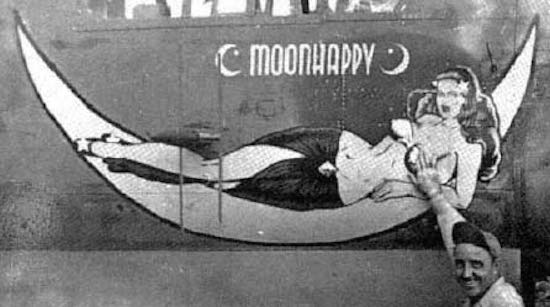
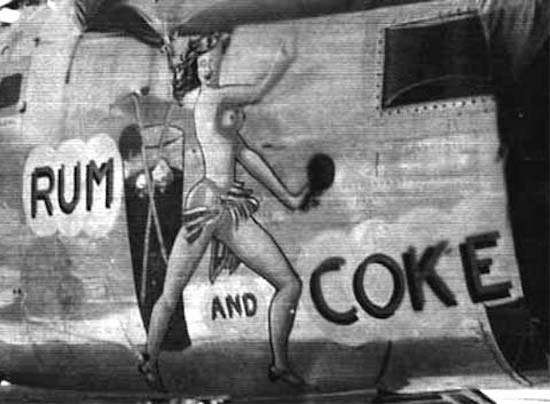
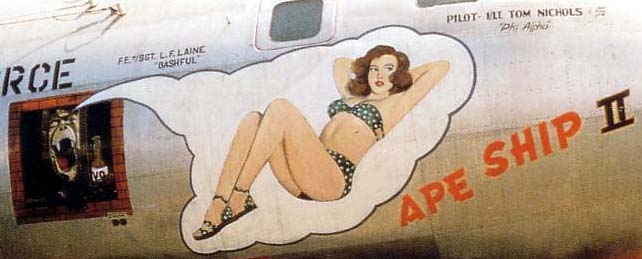
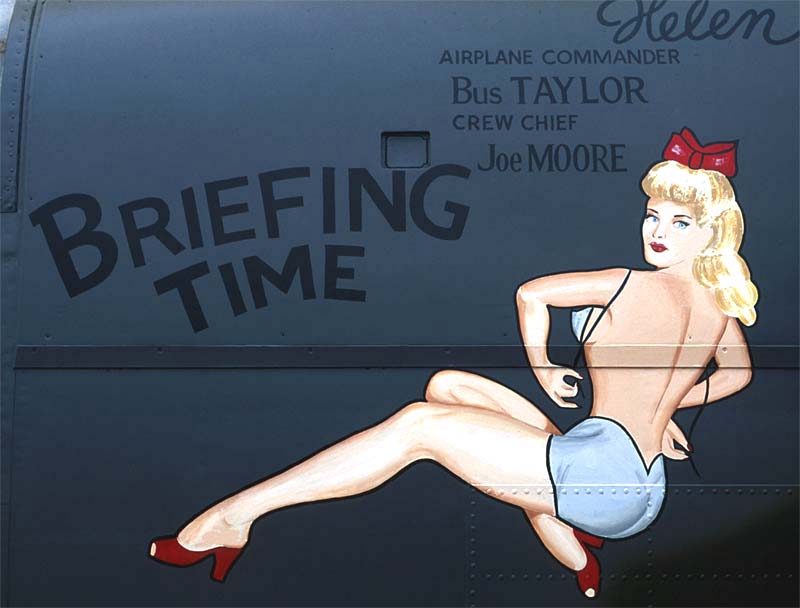
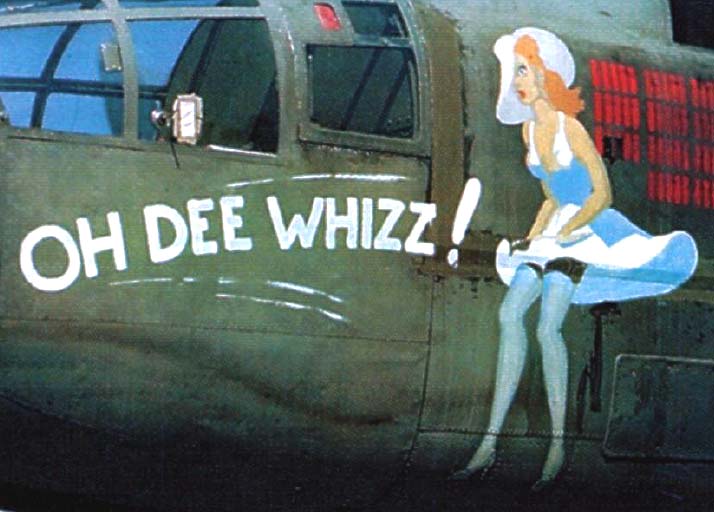
Nose art was the technique of decorating combat aircraft during the
World War II. We know, we have already shown you some nose art, but we
just cannot resist them.
Female
pin-up art dominated World War II nose art, seeing its Golden Age
through the Korean War, tolerated by Army Air Force officials to help
boost the morale of the soldiers fighting in stressful wars with high
probabilities of death.
Take a look at the below collection of cheeky pin-ups airplane nose art.